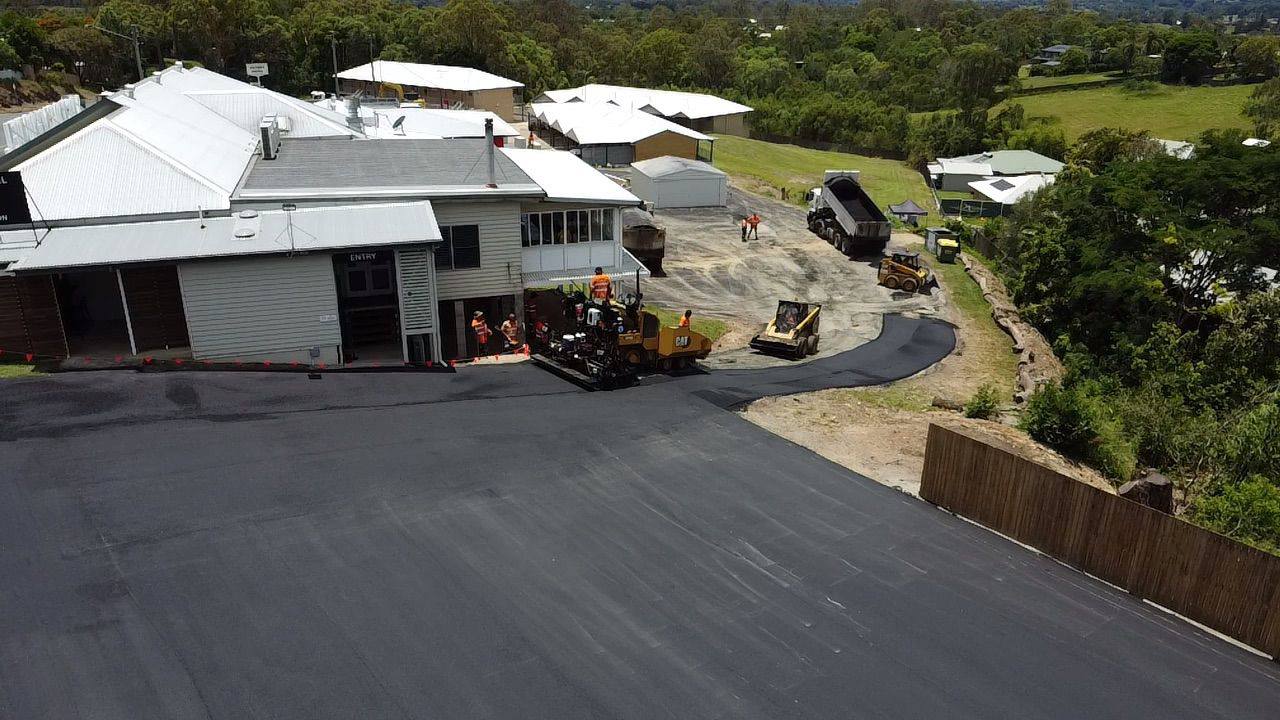
An ageing driveway rarely develops just one problem. Cracks may appear alongside potholes, sections can become uneven, edges may start breaking away, and water can begin collecting where it previously drained effectively. When several issues occur at the same time, repeatedly repairing each visible defect may not always provide the most effective long-term solution.
The important first step is to understand why the problems are developing and whether they are limited to the surface or indicate deterioration within the pavement structure. At Coomera Surfacing Solutions, we provide professional asphalt and bitumen surfacing services throughout Coomera, QLD, assessing existing driveways carefully before recommending an appropriate approach.
Start by Looking at the Driveway as a Whole
When several defects are present, it is useful to stop viewing them as completely separate problems.
A pothole in one section, cracking elsewhere and water pooling near the entrance may all be connected. For example, inadequate drainage can allow water into the pavement, weakening the supporting layers and eventually contributing to cracking, movement and potholes.
A complete assessment helps establish whether the driveway has several isolated defects or one broader problem affecting multiple areas.
Identify the Different Types of Damage
Understanding what is happening across the driveway helps determine the extent of deterioration.
Common issues include:
- Surface cracking
- Potholes
- Uneven or sunken areas
- Crumbling edges
- Loose surface material
- Rutting
- Water pooling
- Rough or weathered asphalt
The location and pattern of these defects can provide useful clues about what is happening beneath the surface.
Don’t Ignore Widespread Cracking
A few isolated cracks may be relatively straightforward to address. Cracking across large sections of the driveway deserves closer investigation.
Cracks provide pathways through which water can enter the pavement. Once moisture reaches the underlying materials, the base can lose strength and provide less consistent support for the asphalt above.
Repeated vehicle movements then place additional stress on weakened sections, potentially causing cracks to spread and other defects to develop.
Potholes May Indicate More Than Surface Wear
Potholes are among the most obvious signs that a driveway requires attention.
They generally develop after the pavement has already started deteriorating. Water penetration, weakened supporting material and repeated traffic can eventually cause sections of asphalt to break apart.
Where several potholes are developing, simply filling each hole may not address the wider condition of the driveway. It is important to determine whether the surrounding pavement and foundation remain stable.
Investigate Why Sections Are Sinking
Depressions or sunken areas can indicate movement beneath the asphalt.
Possible contributing factors include:
- Inadequate compaction
- Weak supporting material
- Water-related deterioration
- Repeated vehicle loading
- Localised base failure
Placing new material over a moving section without addressing the underlying cause can allow the depression to return.
A professional assessment can determine whether the problem is confined to a particular area or affects a larger portion of the driveway.
Check What Happens After Rain
Rainfall can reveal problems that are less obvious when the driveway is dry.
After rain, look for areas where water:
- Forms puddles
- Remains for extended periods
- Flows through cracks
- Runs along damaged edges
- Collects in depressions
Persistent standing water can accelerate pavement deterioration. If drainage is contributing to the problem, it should be considered as part of the repair strategy rather than simply resurfacing over the affected area.
Pay Attention to Driveway Edges
Driveway edges can be vulnerable because they may have less lateral support than the centre of the pavement.
Once an edge begins cracking or breaking away, the damage can gradually move further into the driveway. Water may also enter exposed areas and affect the materials underneath.
Where edge deterioration is occurring alongside other defects, the supporting structure should be examined before deciding on the appropriate repair.
Decide Whether Localised Repairs Are Still Practical
Not every driveway with multiple problems needs complete resurfacing.
Localised repairs may still be suitable where:
- Defects affect only limited areas
- Most of the existing asphalt remains sound
- The foundation is stable
- Drainage is functioning correctly
- The cause of each damaged section can be addressed
Repairing these areas promptly can help preserve the remainder of the driveway.
The situation changes when deterioration becomes widespread.
When Resurfacing May Be the Better Approach
Asphalt resurfacing can be worth considering when the driveway has general surface deterioration but the underlying pavement remains structurally suitable.
Indicators may include:
- Widespread minor cracking
- Numerous previous repairs
- General surface wear
- Increasing roughness
- Loss of surface consistency
- Multiple deteriorating areas
Resurfacing allows the driveway to be treated more comprehensively rather than continuing to patch individual sections as new problems appear.
Existing defects still need appropriate preparation before the new asphalt layer is installed.
When Deeper Reconstruction May Be Necessary
Resurfacing is not designed to hide serious structural problems.
If the driveway has widespread movement, significant settlement or extensive base failure, the supporting pavement may need to be repaired or reconstructed before a new surface is applied.
Warning signs can include:
- Severe deformation
- Large sunken sections
- Recurring potholes
- Extensive interconnected cracking
- Repairs repeatedly failing
- Significant instability beneath the surface
Addressing the foundation first provides a more reliable basis for whatever surface treatment follows.
Why Repeated Patching Can Become a Warning Sign
Individual asphalt patches can be highly effective when used in the right circumstances. However, if repairs are becoming increasingly frequent, it may be time to assess the condition of the entire driveway.
Repeated failures can indicate that the pavement is reaching a stage where isolated maintenance is no longer addressing the broader deterioration.
A driveway covered with patches can also become uneven, affecting both appearance and driving comfort.
Think About How the Driveway Is Used
The appropriate solution should also reflect the demands placed on the driveway.
Factors worth considering include:
- Number of daily vehicle movements
- Types of vehicles using the driveway
- Areas where vehicles regularly turn
- Sections used for parking
- Entrances exposed to concentrated traffic
Understanding these patterns helps identify why certain sections may be deteriorating faster than others and ensures any repair or resurfacing work is suitable for everyday use.
Why a Professional Assessment Is Valuable
When a driveway has several different problems, deciding where to start can be difficult. Treating only what is visible may overlook drainage problems, weak pavement layers or other factors contributing to the deterioration.
At Coomera Surfacing Solutions, we assess existing driveways throughout Coomera, QLD with attention to surface condition, drainage, pavement stability and how the area is used. From there, we can determine whether targeted repairs, asphalt resurfacing or more extensive preparation is the most appropriate solution.
The aim is to resolve the causes of deterioration wherever possible rather than simply improving the appearance of the surface.
Conclusion
If your existing driveway has multiple problems, the best approach is to have the pavement assessed as a complete system. Cracks, potholes, depressions, edge damage and poor drainage may be separate defects, but they can also indicate broader deterioration beneath the surface. Localised repairs can be effective where most of the driveway remains sound, while widespread wear may make resurfacing more appropriate. Where the foundation has deteriorated, deeper preparation may be necessary before a new surface is installed.
For property owners in Coomera, QLD, Coomera Surfacing Solutions provides professional asphalt and bitumen surfacing solutions tailored to the condition of each driveway. If several problems are beginning to affect your existing surface, our experienced team can assess what is causing the deterioration and recommend a practical approach to restoring reliable, long-term performance.
Call us on: 07 3113 9392
Click here to find out more about Coomera Surfacing Solutions
Click here to complete our contact form and see how we can help with your driveway needs.